
Featured Plants
An in-depth look at a plant – what makes it special, it’s characteristics, where to find it in the natural landscape, and other notables. Common non-native and invasive plants are occasionally reported about.
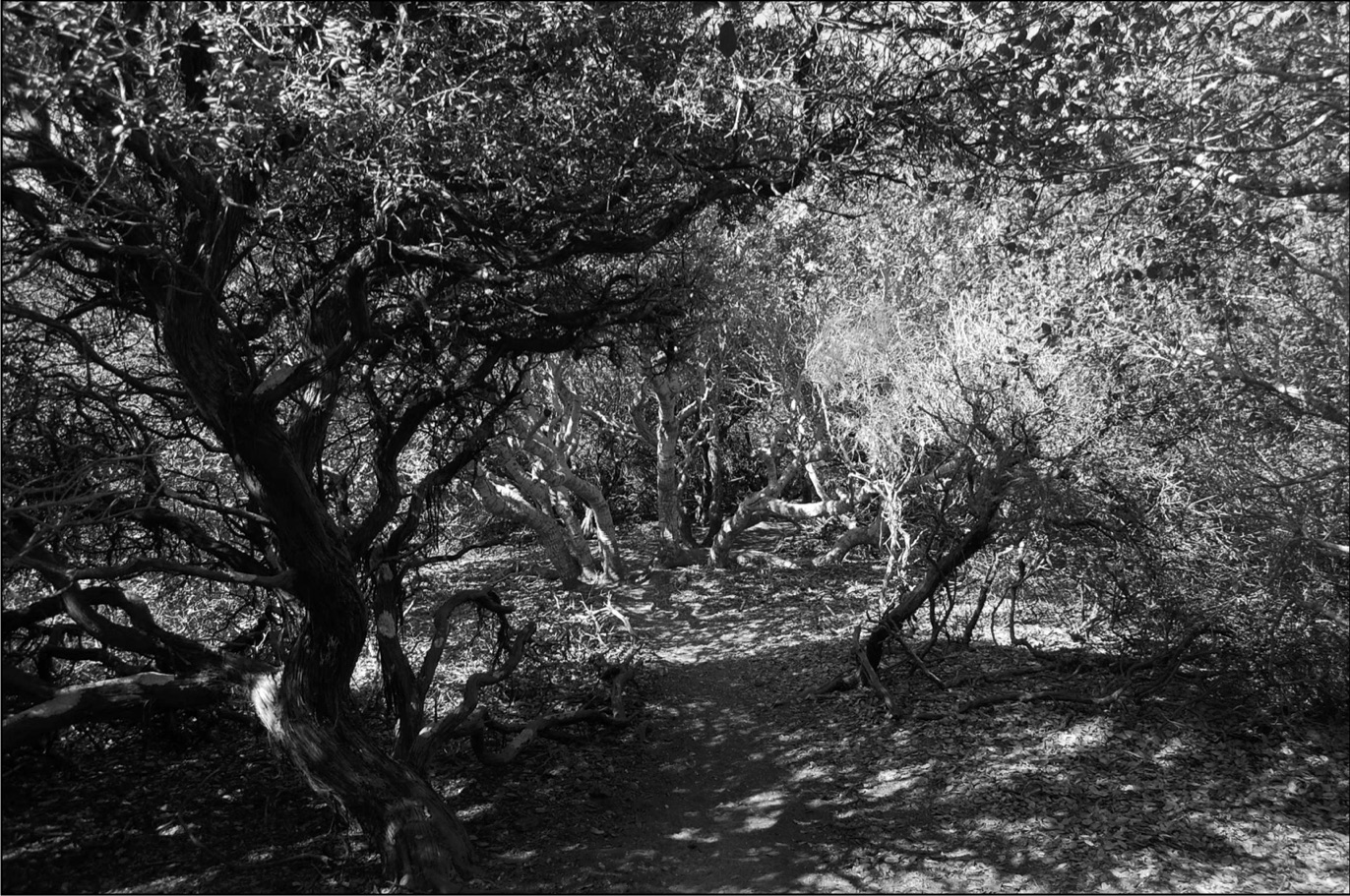
The Morro Manzanita Chaparral Natural Community
In our November 2019 newsletter we discussed the Los Osos Habitat Conservation Plan, a plan prepared by the County of San Luis Obispo to address the impacts of development in Los Osos. In that plan there is a great deal of discussion of the Morro manzanita, Arctostaphylos morroensis, a plant that is listed by the U.S. Fish and Wildlife Service (USFWS) as Threatened under the authority of the federal Endangered Species Act. It is also a list 1B species, indicating rarity in California and elsewhere. What may not be as well known is that Morro manzanita is also the dominant vascular plant species of a rare natural community known as Morro manzanita chaparral, the Arctostaphylos morroensis Shrubland Alliance, as defined by the Manual of California Vegetation (Sawyer, Keeler-Wolf and Evens, 2009). This is an example of a natural community that is dominated by a listed species. Not all sensitive natural communities are.
Morro manzanita chaparral has a global ranking of G1 and a State ranking of S1, which is the highest (and rarest) ranking a natural community can have. Remember the Giant coreopsis scrub that we reviewed in our last newsletter? That community was G3, S3, also sensitive, but not as sensitive as the Morro manzanita chaparral, at least according to the California Department of Fish and Wildlife (CDFW) VegCAMP program. The Program and the CNPS Vegetation Program review the rankings, which are based on the NatureServe’s Heritage Methodology.
Morro manzanita chaparral occurs in three primary areas in the Los Osos/Montana de Oro area. It occurs north of town in the Elfin forest and northeast of the Middle School; south of town on the north-facing slopes above Highland and Rodman Drive; and in two large stands in Montana de Oro State Park. The Plant Communities committee of the SLO Chapter has sampled each of these areas using the Rapid Assessment techniques of the VegCAMP program, and we have found that in the 4 stands sampled, the cover of Morro manzanita varies from 23 to 85 percent, with the average being 53 percent. Other species occurring in these stands include chamise, wedge-leaved Ceanothus (Ceanothus cuneatus), and coast live oak. There are many other species, such as monkeyflower, black sage, and phlox-leaved bedstraw (Galium andrewsii), but they occur at very low cover values. The stands are almost impenetrable due to the low shrubby branches of the manzanita, and if it weren’t for already created trails in some of these areas, it would be difficult to walk through them. Two stands we sampled are located on north slopes; one on a south slope, and another on a fairly flat surface. On the Geologic Map of the San Luis Obispo-San Simeon Region (1979), all are shown to be on dune sands, but there are outcroppings of soft shales in the Cabrillo Heights area.
Many interesting mushrooms, bryophytes, and lichens occur in this community.
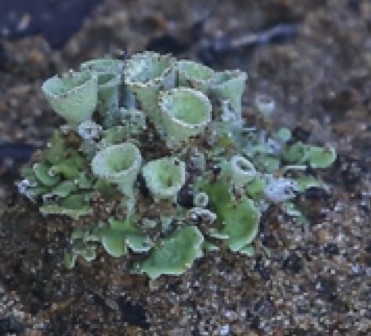
Pixie cup
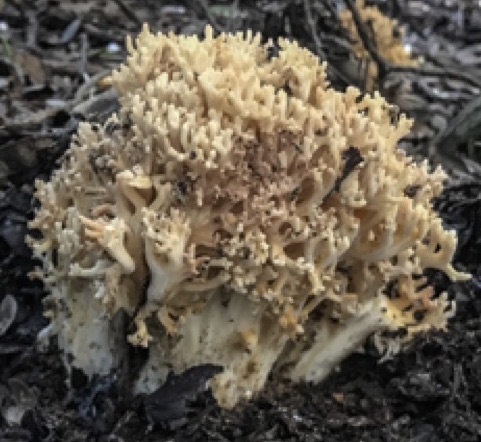
Coral fungus

Manzanita flowers
One of my favorite lichens is the pixie-cup lichen (Cladonia sp., see photo), which can be found on the moist soils alongside the trails beneath and sometimes on the lower bark of the Morro manzanitas. There are several species in the area. One very rare species, Cladonia firma, occurs primarily in the coastal sage community just north of the Morro manzanita chaparral in the Morro Dunes Ecological Preserve, but it also filters into the chaparral in some areas where the two communities intermix as a mosaic. A unique mushroom I found two years ago in the stand south of Highland Drive is the coral mushroom (Ramaria sp., see photo). I almost felt as if I was underwater when I saw it! It was growing under the manzanita in colonies with other mushrooms.
Also occurring within this community is the Indian Knob mountainbalm (Eriodictyon altissimum), a species that is listed by the USFWS and the CDFW as Endangered. It is also a 1B species. This species occurs in only a few other areas in San Luis Obispo County, at Indian Knob near San Luis Obispo, and in Hazard Canyon at Montana de Oro. It appears to establish clones from rhizomes, and, like the Morro manzanita chaparral, is fire-dependent.
Morro manzanita chaparral is a very rare natural community that is seriously threatened. It’s location near Los Osos provides a unique habitat for contemplation, exercise, and enjoying nature. However, in some areas, it is being loved too much. Individual plants are being trimmed haphazardly by unofficial trail makers. Erosion of the very sandy soils is sometimes severe, creating extensive scars, exacerbated by foot and horse traffic. The issue of fire clearance to keep the public safe needs to be studied and addressed if it proves to be detrimental. And, although some populations are preserved, as always, we need to be ever vigilant of development being proposed within the area.
Photo Credits: Inside the Manzanita Canopy: David Chipping, Coral Fungus: Melissa Mooney, Morro Manzanita Flowers: David Chipping, Cladonia sp. Melissa Mooney
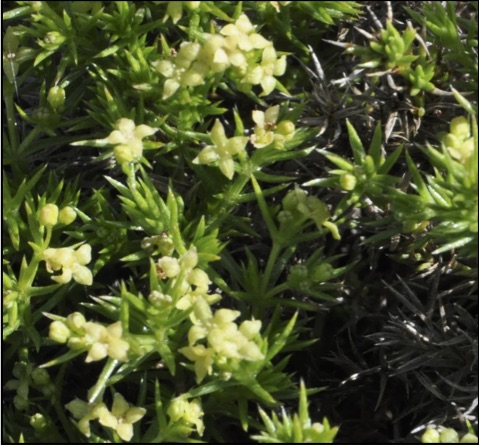
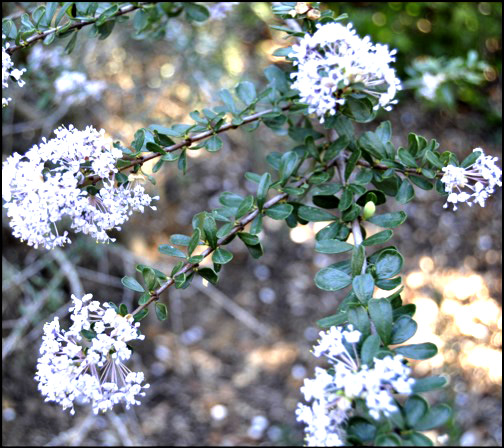
Two components of the Morro Manzanita Chaparral Natural Community. Left: Galium andrewsii; Right: Ceanothus cuneatus var. fascicularis Photos: David Chipping
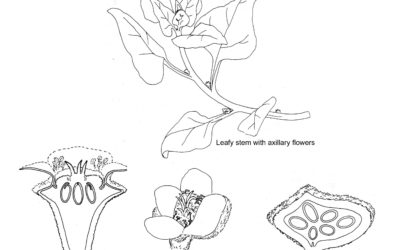
Tetragonia tetragonoides (New Zealand Spinach)
New Zealand spinach belongs to a family of flowering plants, Aizoaceae, that is primarily native to the Southern Hemisphere. New Zealand spinach is, in fact native to Southern Africa but has spread to New Zealand and is apparently a serious weed throughout southern Australia. Obviously, it has also been introduced into North America and Eurasia.

Clarkia unguiculata (Elegant Clarkia)
Elegant clarkia gets that name because its flowers are beautiful (and elegant) and the plant stands tall (up to 3 feet or more) which adds to its elegance.
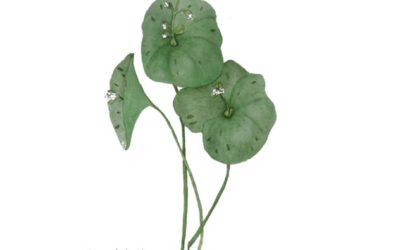
Claytonia perfoliata (Miner’s Lettuce)
Heather Johnson has a new watercolor for us to use on the cover of this issue of Obispoensis. It’s most commonly identified around the central coast as miner’s lettuce (Claytonia (Montia) perfoliata). The situation where a leaf blade base appears to be passed through (perforated) by its stem is said to be perfoliate.
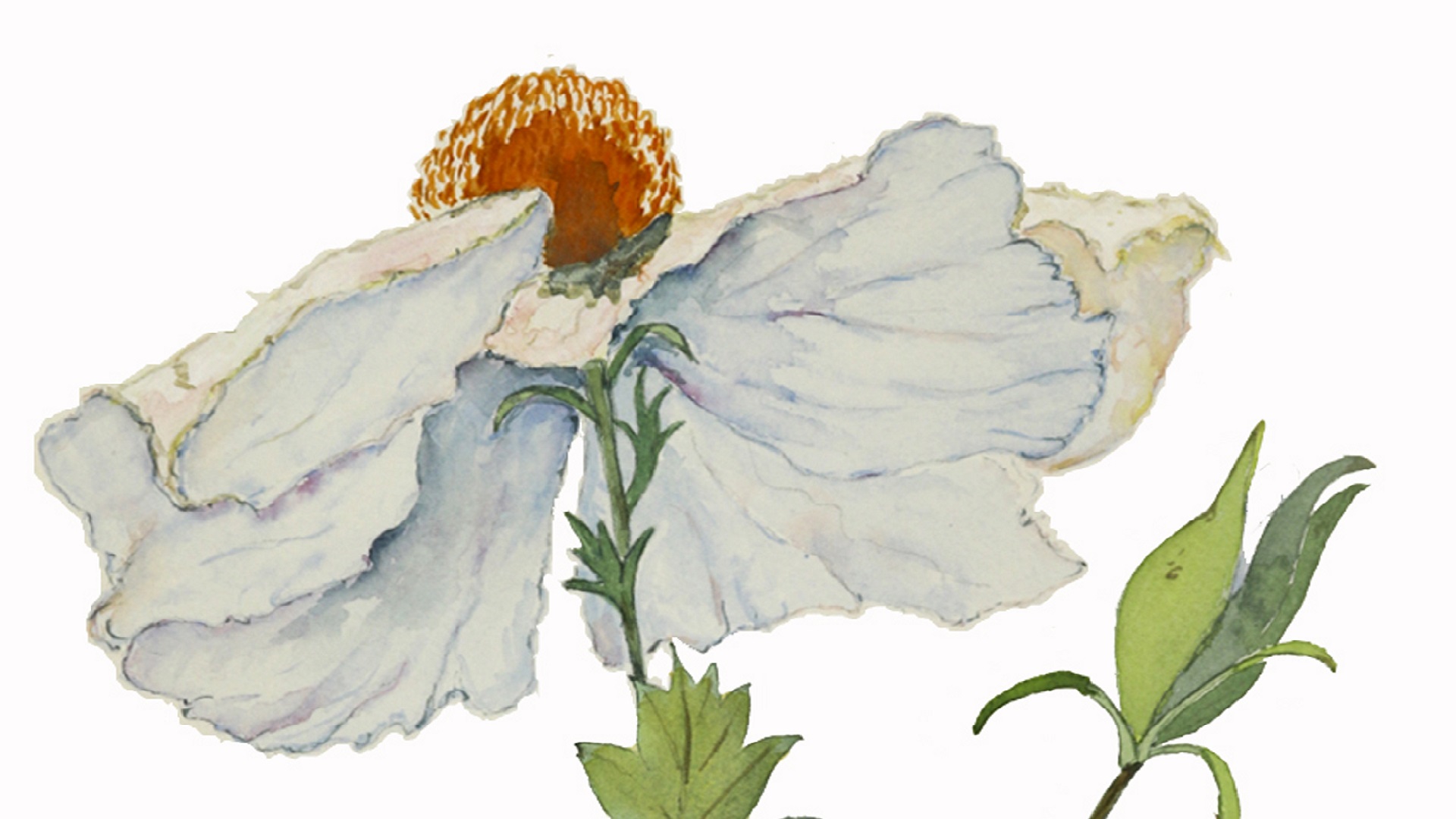
Matilija poppy
The cover of the May-June Obispoensis features a watercolor of Matilija poppy, Romneya coulteri, by Heather Johnson. Dirk Walters provides an introduction and notes to the description written by Alice Meyer back in the 1970’s or early 80’s for the local Audubon Chapter Newsletter.
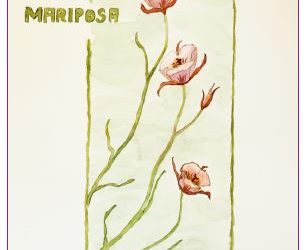
Calochortus (Mariposa lily, fairy lantern and star-tulip)
The native plant on the cover of this Obispoensis is a beautiful rendition of a species of the genus Calochortus. The painting is another of Heather Johnson’s.
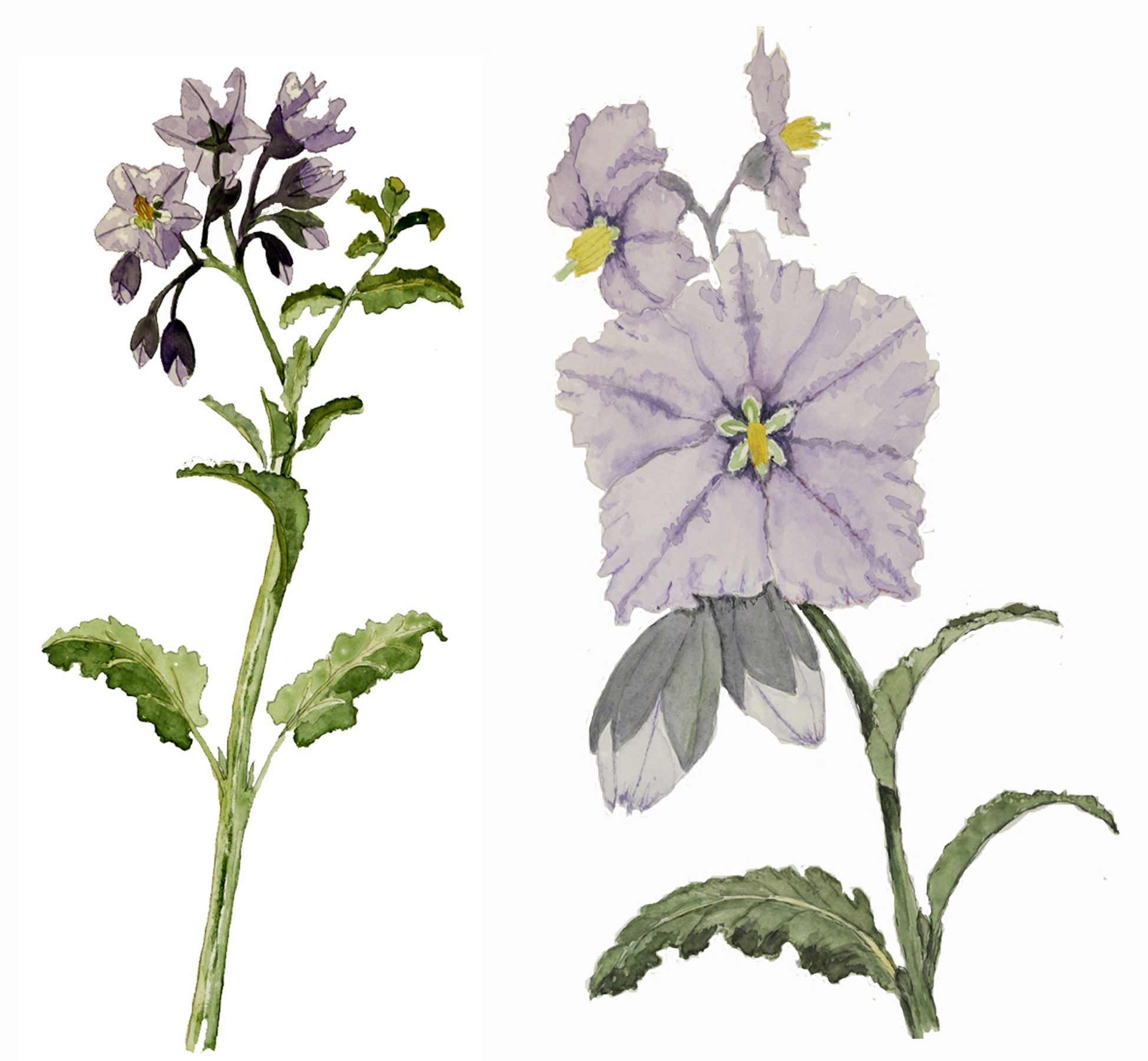
Solanum xanti (Blue, Purple, Chaparral, or San Diego Nightshade)
Solanum xanti, Blue nightshade, article accompanied by original watercolor painting by Heather Johnson. Blue nightshade (the name most commonly used around here) is not pushy in its appearance unless it’s in bloom. It is up to a yard tall and the stem is half woody or suffrutescent. The ordinary looking, mostly un-lobed leaves are up to 3 inches long and lanceshaped to oval. Blue nightshade even prefers to grow near other plants and just blend in.
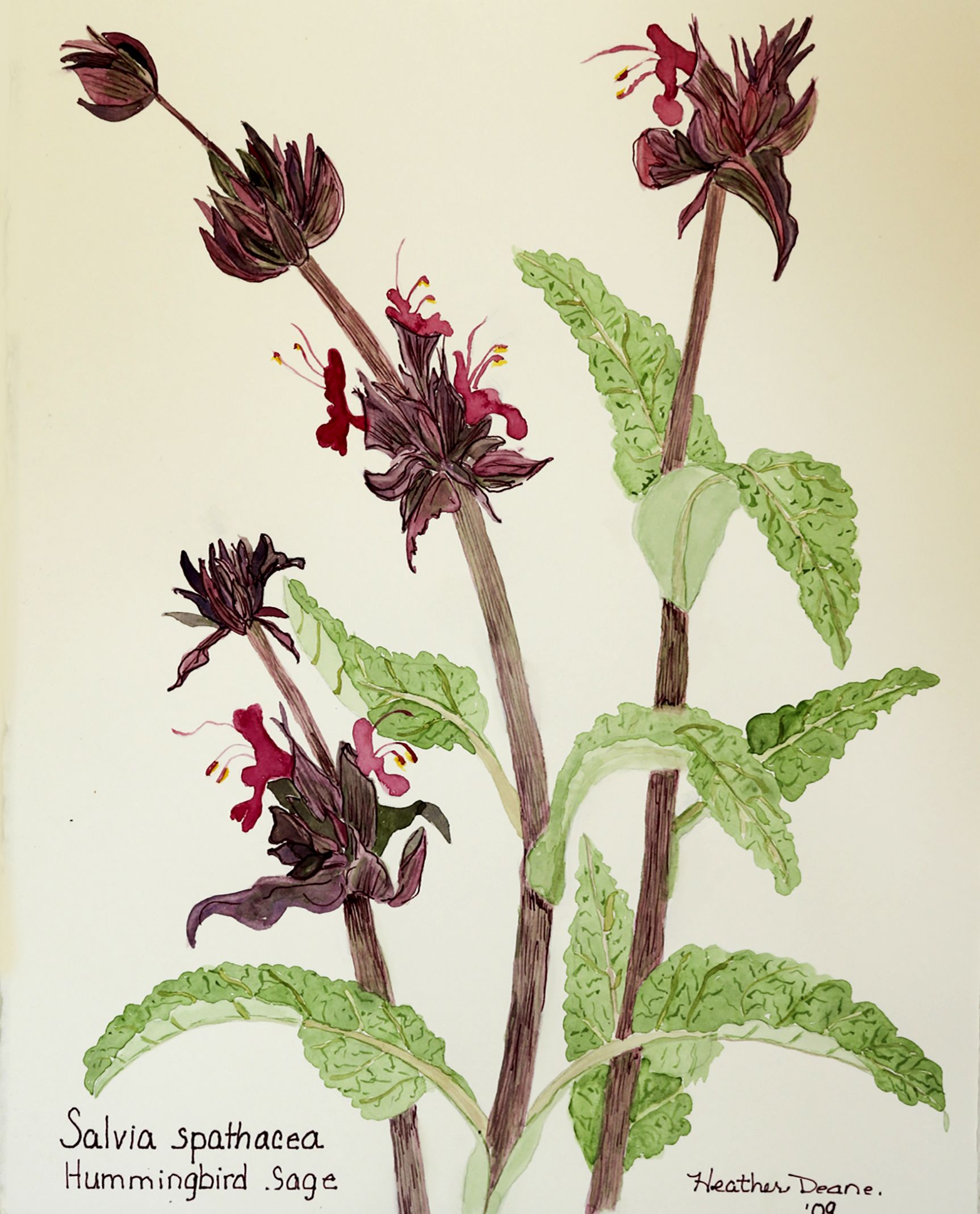
Salvia spathacea (Hummingbird Sage)
The cover of this Obispoensis is another beautiful water color by Heather Johnson. In our area Hummingbird sage can grow in an extensive mat. Its leaves are large (10 in (20 cm) long and 3 in (8 cm) wide). The leaf surface appears quilted. Its family affiliation (Mint or Lamiaceae or Labitae) is shown clearly in Heather’s water color.
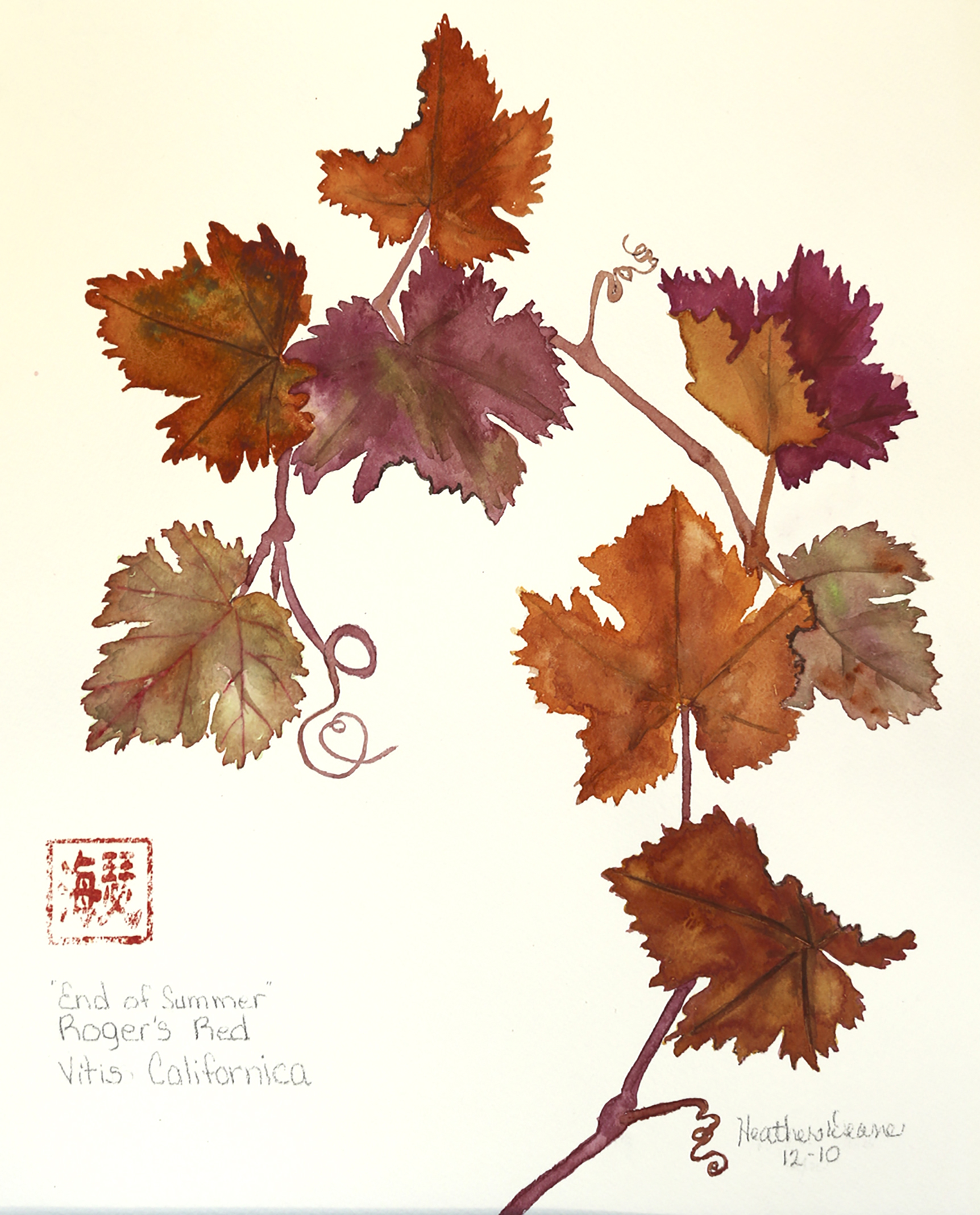
Vitis californica (California grape)
As well as reddish fruits, this variety of wine grape produces bright red leaves in the fall. Enter DNA to the story. Several DNA studies proved that the cultivar ‘Roger’s Red’ is truly a hybrid between the native California grape and the European wine grape Vitis vinifera var. Alicante Bouschet.
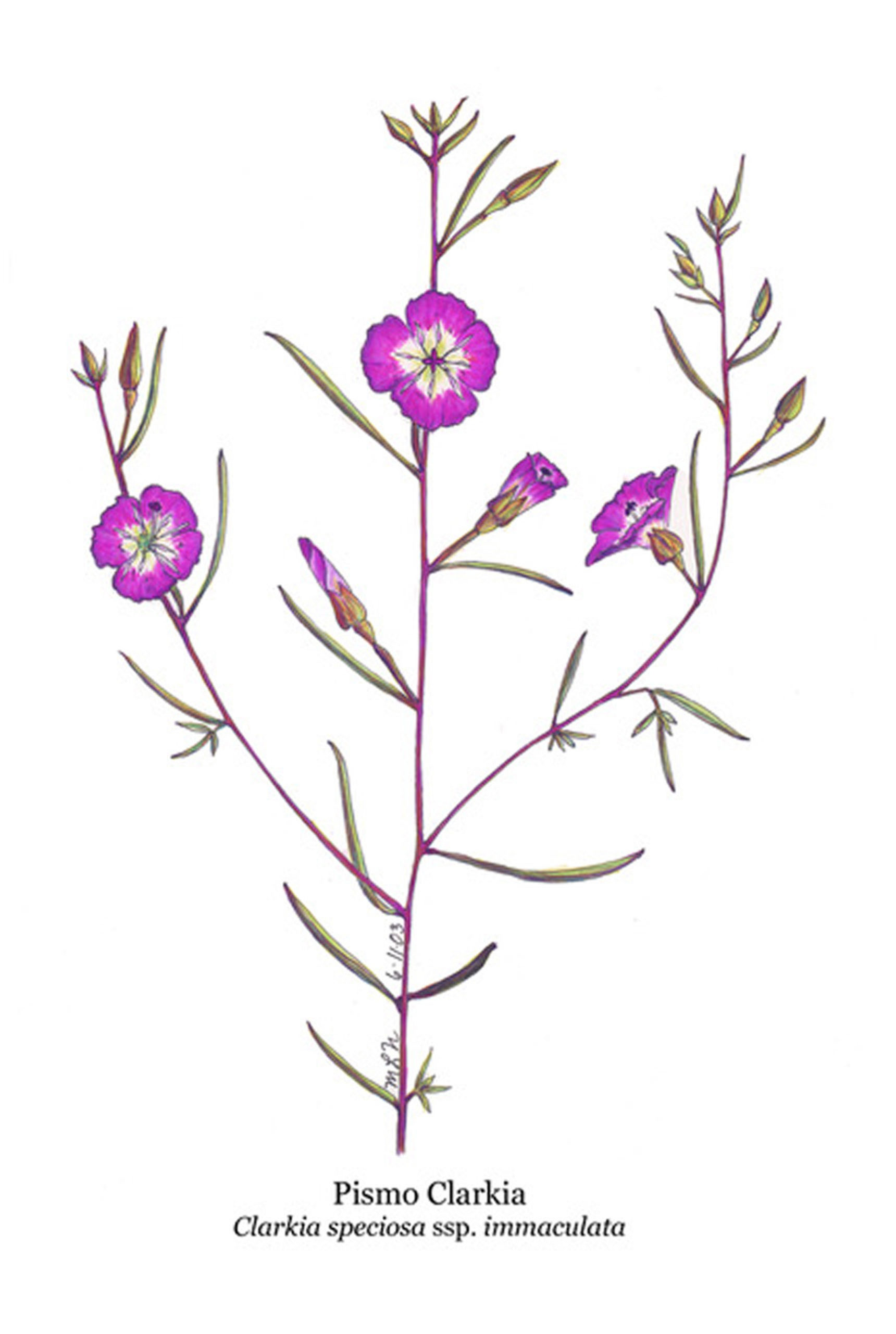
Clarkia speciosa subsp. immaculata (Pismo Clarkia)
I chose the Pismo clarkia because it grows in the area surrounding Mardi’s home and nowhere else. It grows naturally in about 20 occurrences from the southern Edna Valley, south through the foothills and valleys of the Southern San Luis Range, ending east of Pismo Beach and Arroyo Grande (Huasna Valley).
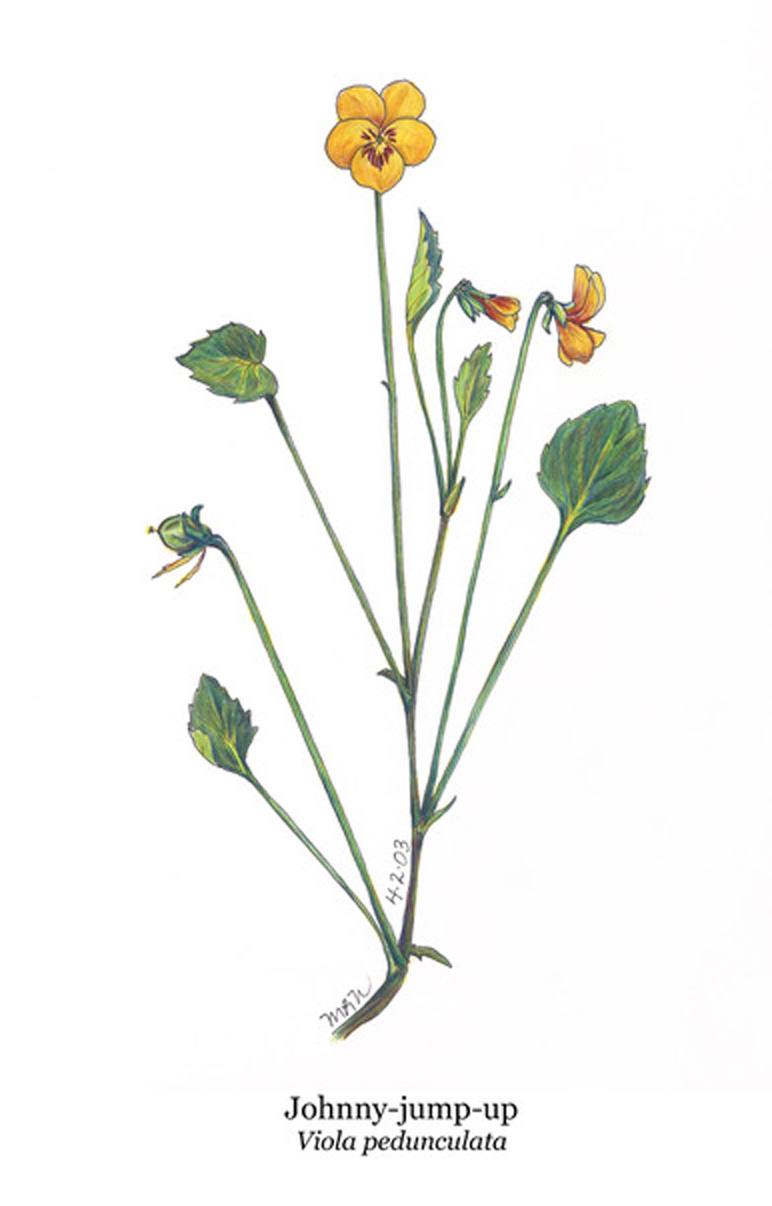
Viola pedunculata (Johnny-jump-up)
Wild (California, yellow, or grass) violet, pansy or Johnny –jump-up This botanical illustration was created by Mardi Niles using a Micron 005 #1 Archival Ink pen and Prismacolor Verithin colored pencils on Bristol Regular paper. It will be the first of several...
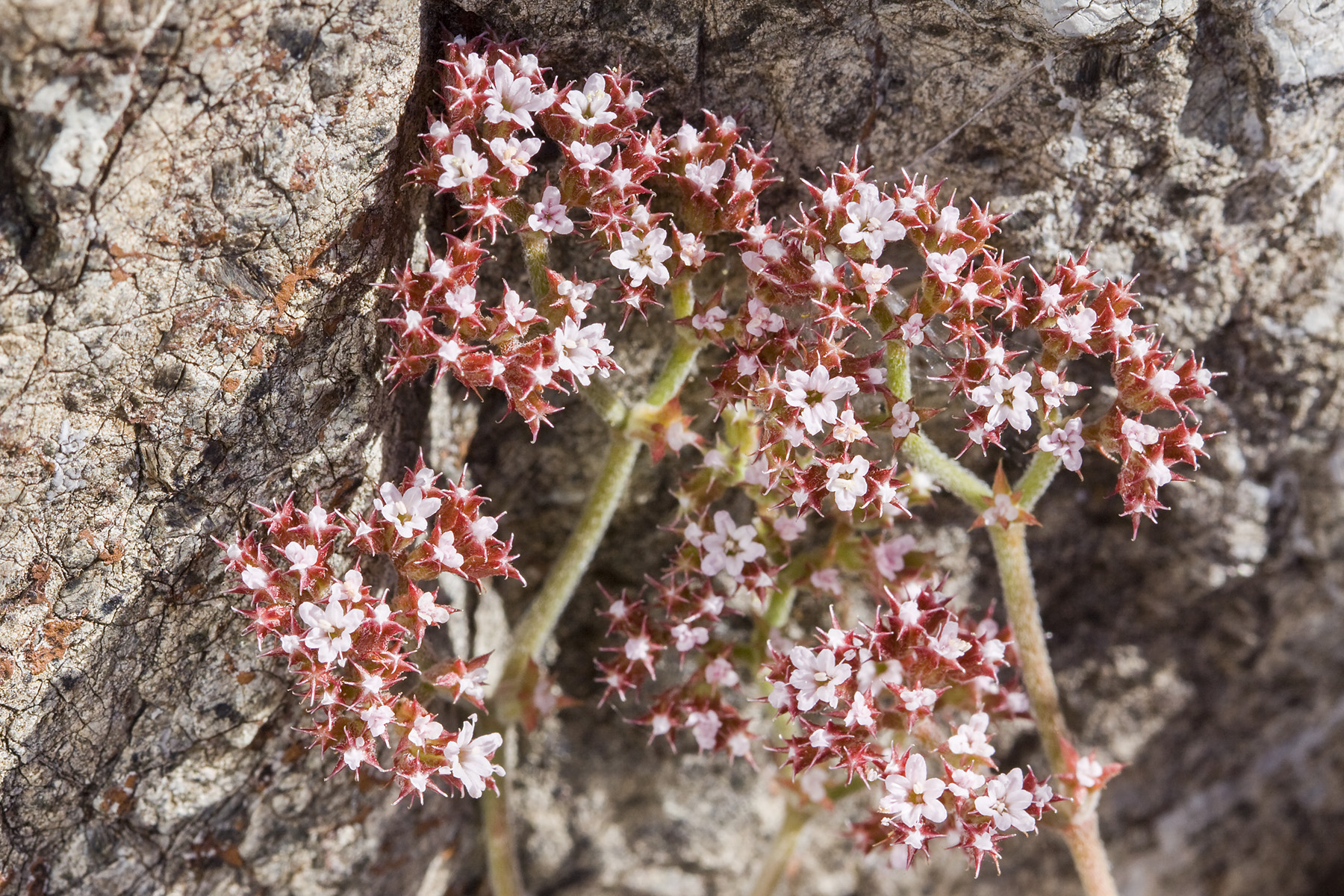
The Sargent Cypress Botanical Reserve: A Hammock Forest
Author: WOODY FREY, Professor emeritus, OH Department, CalPoly, San Luis Obispo. This article was first published in Pacific Horticulture and is reprinted here with permission. Six miles north of San Luis Obispo, California, up a winding road off Highway 101 at an...
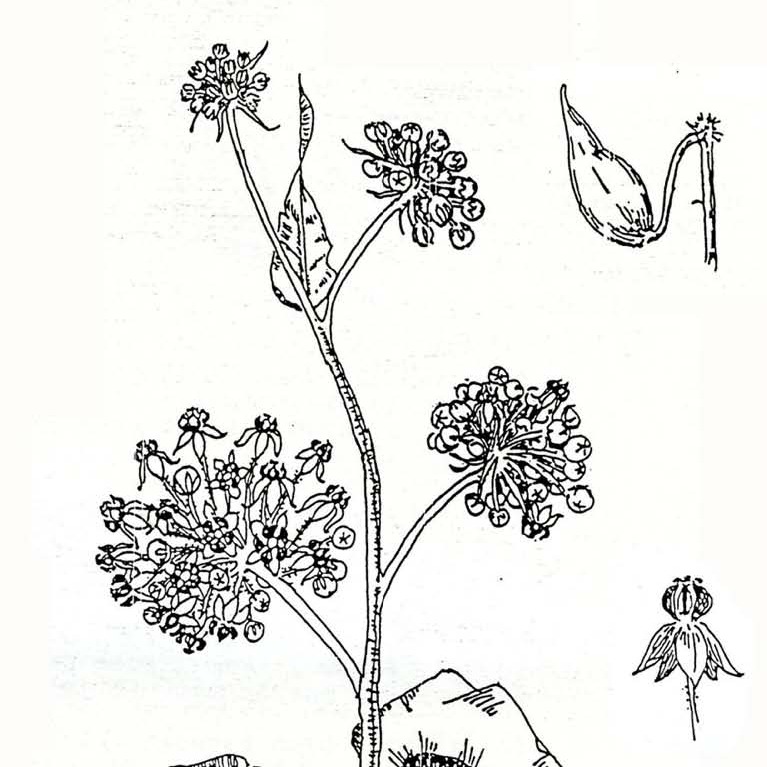
Common Milkweed (kotolo) Asclepias eriocarpus
The cover drawing and article for this issue of the OBISPOENSIS was written and drawn by Alice Meyer. She was a very active member (and first Hoover Award Recipient in the 1970 and 80’s. She is the one who named our newsletter, OBISPOENSIS, and served as its editor...
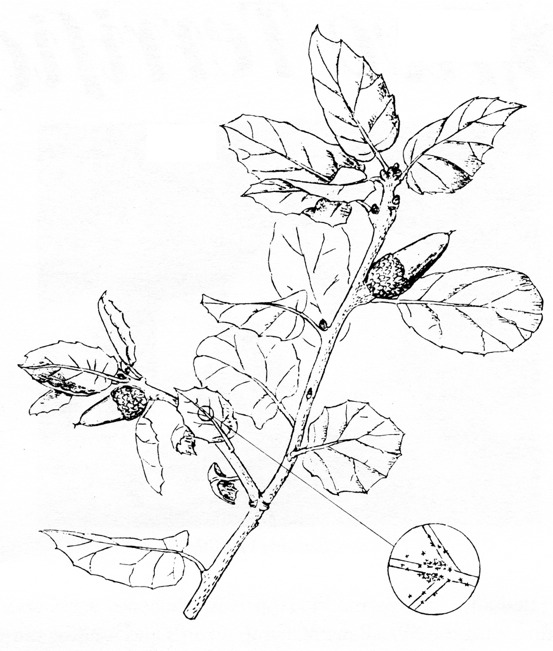
Coast Live Oak
Dirk Walters, illustration by Bonnie Walters Oaks have been in the news a lot recently. Essentially all of it has been bad from the Oak’s point of view. First, there was the clearing of valley (Quercus lobata) and blue (Q. douglasii) oaks in the Paso Robles area. and...
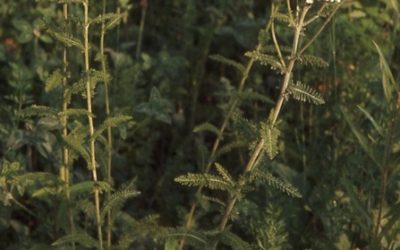
Common (White) Yarrow (Achillea millefollium)
Common (White) Yarrow (Achillea millefollium) The plant discussed in this issue of the Obispoensis is one that I’ve wanted to take on for a long time, but could never bring myself to ask Bonnie to draw. Since we are using photos to illustrate it by, I think it’s time....
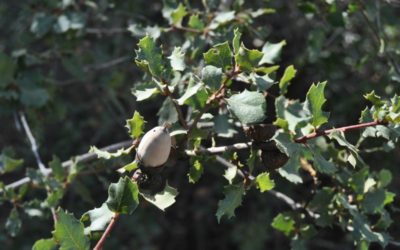
The Juniper-Oak Plant Association of Caliente Mountain
Caliente Mountain is the highest spot in the County, and forms the western side of Carrizo Plain National Monument The oak on Caliente Mountain. is Tucker's oak, a scrub oak with blue-green, spiny leaves that stands a little over head height but can reach to 7 meters....
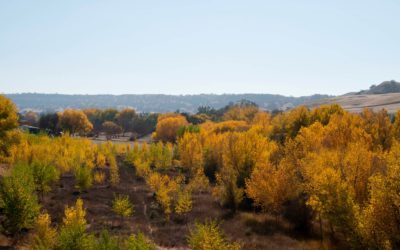
Fall Color
O.K.... so we’re not Vermont. However we do have some pretty fall color displays. If you like the gold of aspen, you will see the same colors in our closely related cottonwood stands, both trees belonging to the genus Populus. Cottonwoods are riparian trees, and the...
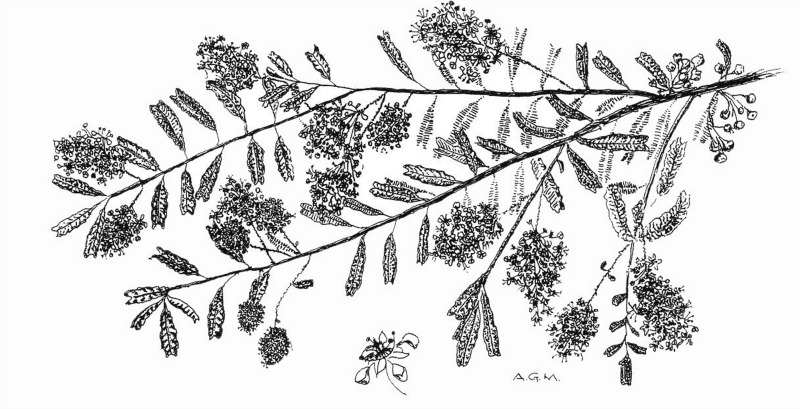
Ceanothus hearstiorum
Introduction October and November are when our Chapter gets serious about growing native plants. We have a November meeting devoted to it as well as our annual plant sale. This got me to remembering some articles written and drawings drawn by Alice G. Meyer that are...
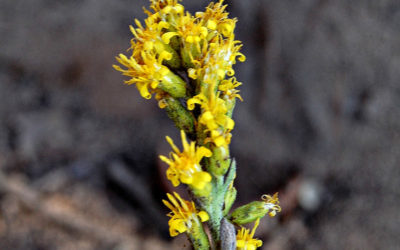
Solidago californica
California Goldenrod (Solidago velutina ssp. californica or S. californica) The photo by Dr. David Chipping that accompanies this note are of the California goldenrod (Solidago velutina ssp. californica or Solidago californica). According to Dr. Hoover in his Vascular...
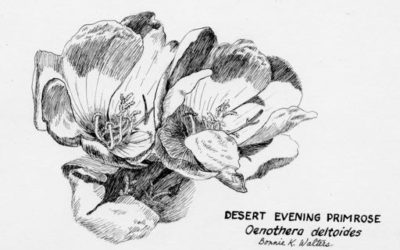
Oenothera deltoides
Desert Evening Primrose (Oenothera deltoides) Desert evening primrose (Oenothera deltoides) is in full bloom at Shell Creek as I write this. So it seemed appropriate to resurrect a drawing Bonnie drew back in 1981. It is one of her earlier drawings since it shows a...
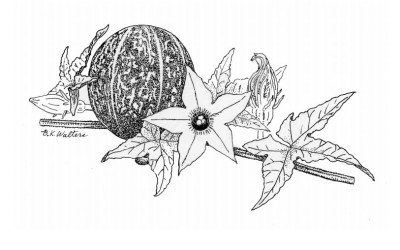
Cucurbita palmata
Coyote melon Bonnie’s drawing for this issue of Obispoensis is based on a picture sent to me by George Butterworth. The species, Cucurbita palmata, has many common names. The ones I found on the web include coyote melon, coyote gourd, desert gourd, palmate-leafed...
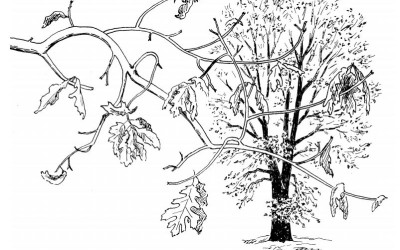
Quercus Kelloggii
Kellogg Oak The following is an article from February 1993. It was chosen by the editor to spare me the choice since Bonnie and I were away in late October. We totally agree with his choice; we had totally forgotten about it. The repeat of this article reminds me that...
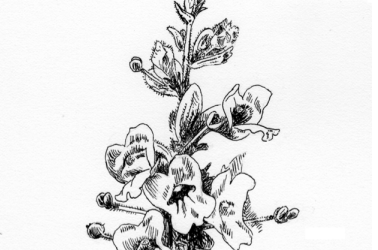
Antirrhinum ovatum
Oval Leaved Snapdragon Drawing by Bonnie and article by Dr. Malcolm McLeod below appeared in the November, 1991 Obispoensis. When you read it you will see lots of similarities with our current drought situation as well as the much hoped for possibilities of an...
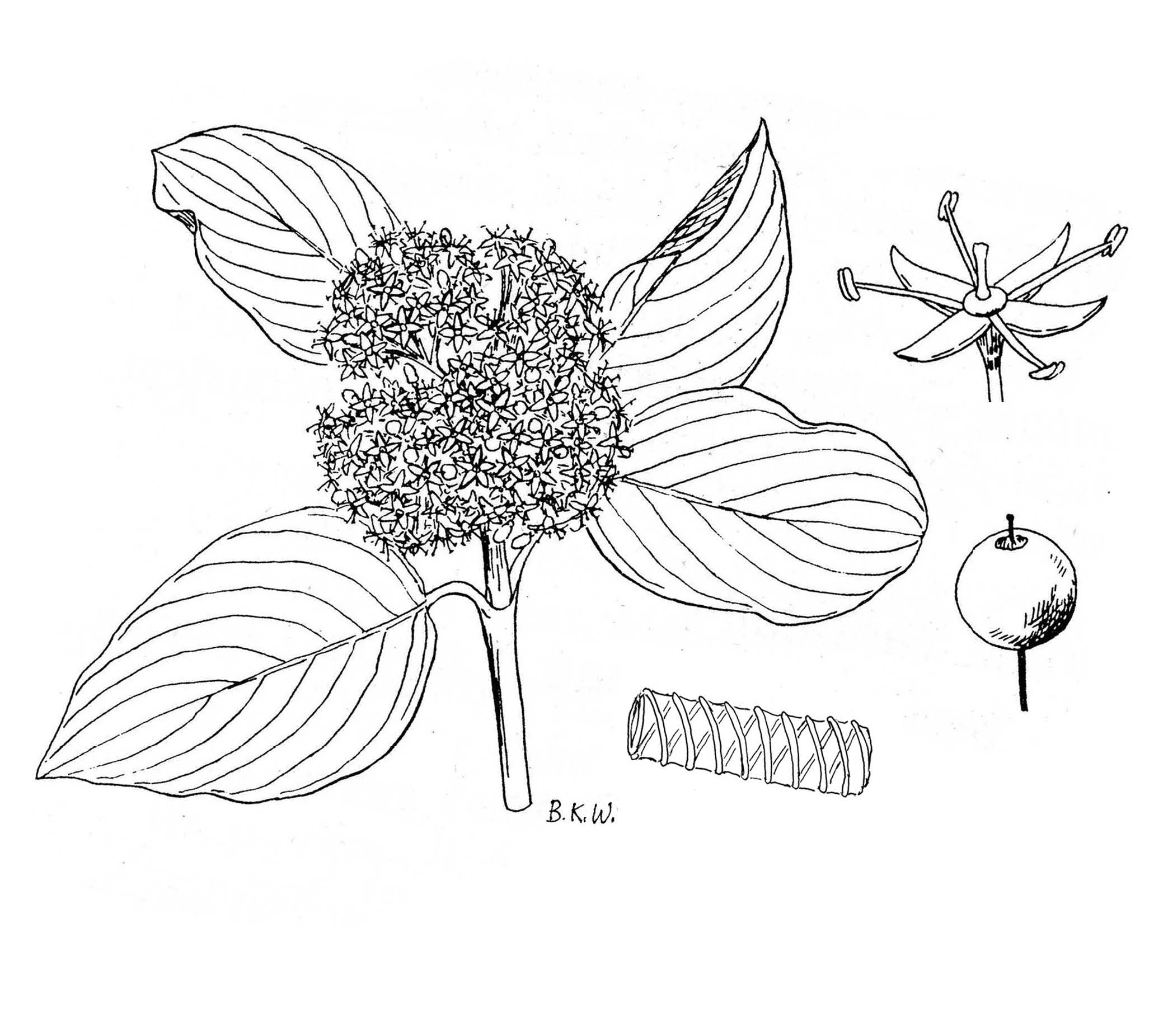
Cornus sericea
Creek Dogwood For this issue of the Obispoensis, I’m going out on a limb so to speak. Since the plant is a very small tree or moderately sized shrub, that limb will prove to be slender. The plant is the red osier, creek, or as stated in the new Jepson California...
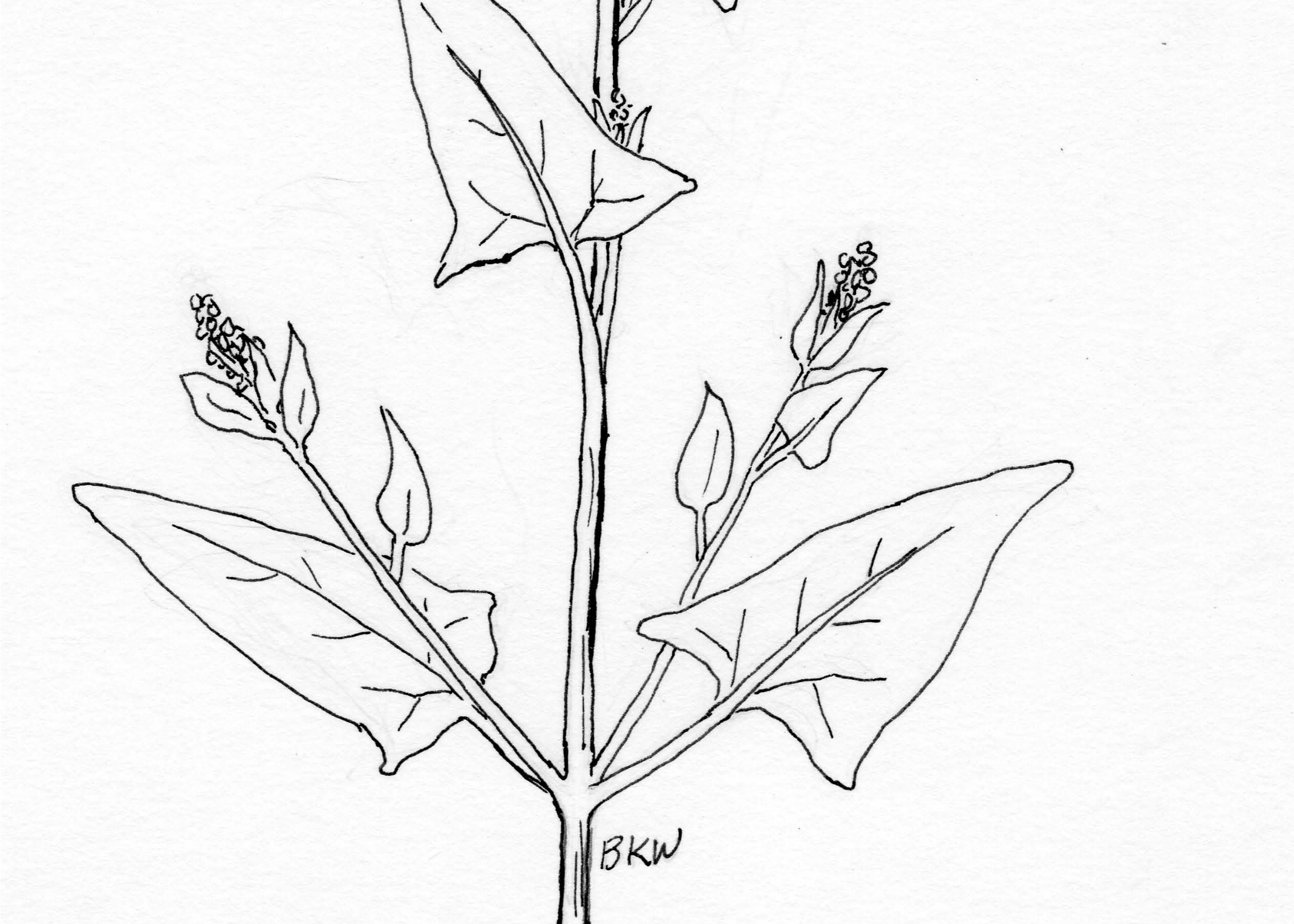
Atriplex patula
Spear Orache, Spear Salt Bush As I write this article, it’s August in the year of California’s third most severe drought. There’s not much out there in bloom. So I’ve retreated to one of the few places where plants are doing anything. Yes, I’m returning to the coastal...
Calandrinia ciliata
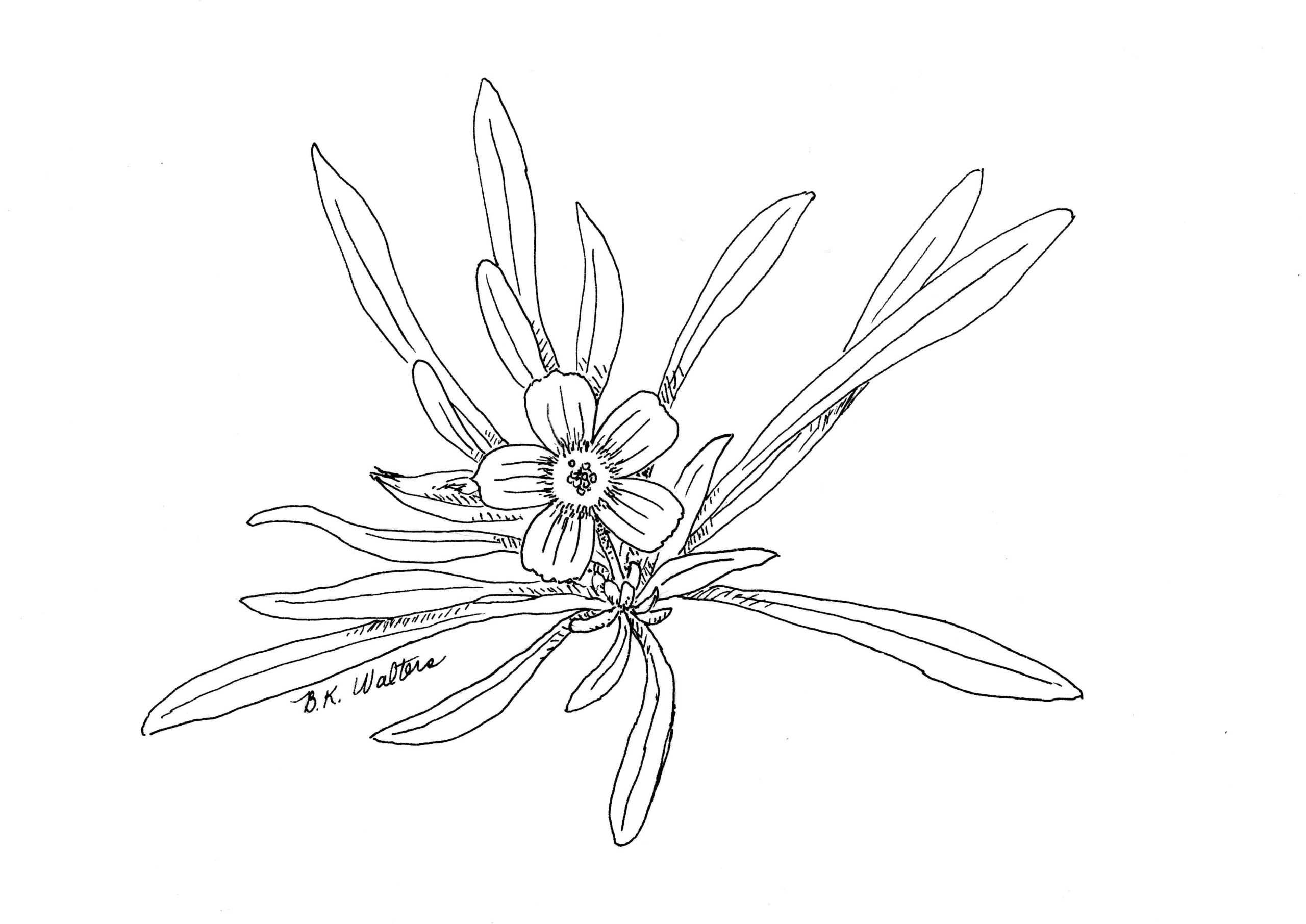
Red Maids Bonnie’s drawing for this issue of Obispoensis is of a plant that is found throughout the western United States as well as spreading north into British Columbia. It has also been recorded in a couple of South American countries. It is especially common in...